
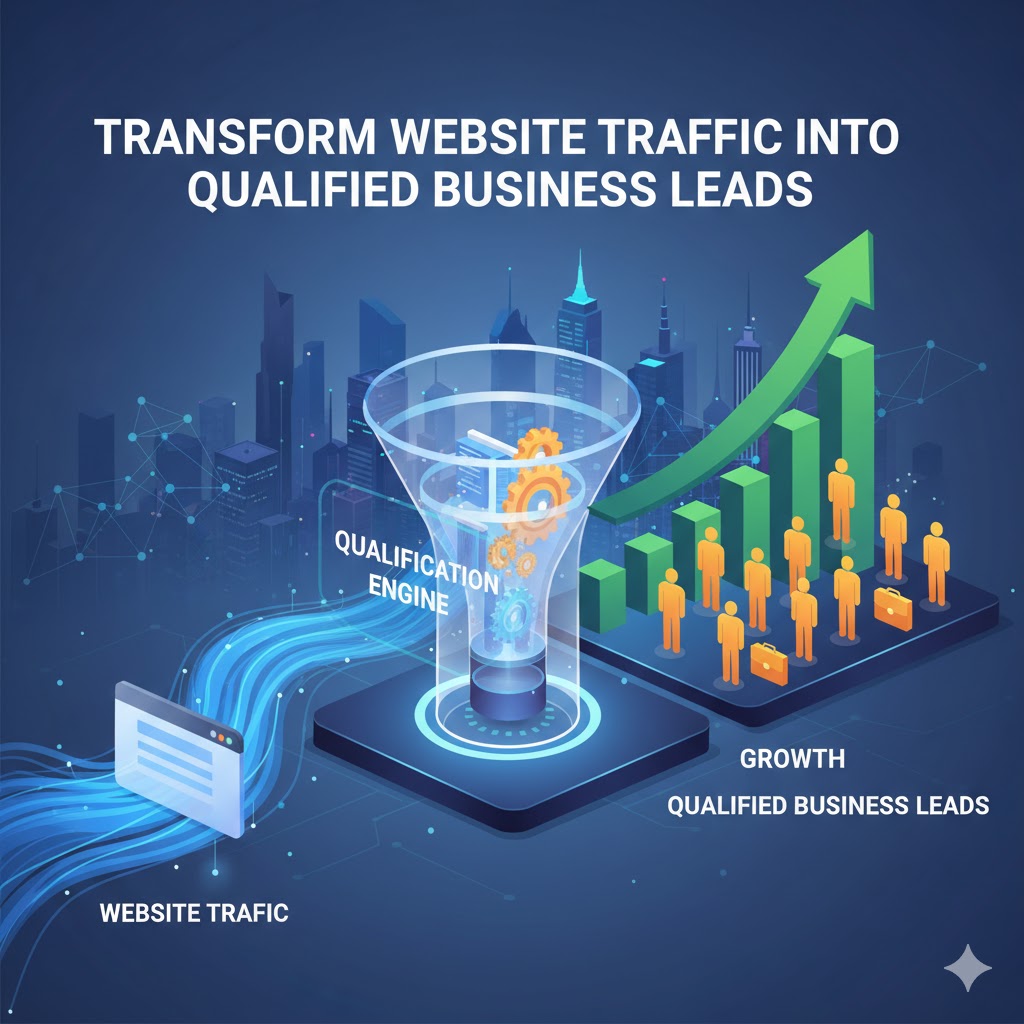
Every business wants more website traffic, but traffic alone doesn’t guarantee success. The real goal is to attract visitors who are genuinely interested in your products or services — the kind of audience that converts into paying customers. Turning website visitors into qualified business leads requires a focused digital marketing approach built around strategy, data, and user experience. Here’s how you can transform ordinary traffic into valuable leads that drive real growth for your business.
Understanding the Difference Between Traffic and Leads
Website traffic refers to the number of people who visit your site. While it’s a good indicator of visibility, it doesn’t mean those visitors are ready to take action. A qualified lead, however, is a visitor who fits your target audience, engages with your content, and shows genuine interest in your offering. The key is filtering out random traffic and guiding the right users toward conversion through intent-driven marketing.
Start With a Strong Value Proposition
Your website should clearly communicate why someone should choose your business. Visitors should instantly understand what you offer, how it benefits them, and what makes your services different. A compelling headline, short description, and prominent call-to-action (CTA) can make a major difference. Avoid vague statements — instead, focus on clarity and direct value. For example:
- Instead of “We build websites,” say “We design high-converting business websites that drive measurable sales.”
- Instead of “We do SEO,” say “We help your business appear on Google when your customers are searching for you.”
Create Targeted Landing Pages
Landing pages are where most conversions happen. A well-optimized landing page should focus on one clear objective, such as collecting contact details or encouraging consultation bookings.
Here’s what makes a landing page effective:
- A clear, benefit-driven headline.
- Relevant visuals or testimonials for trust.
- A short, easy-to-complete form.
- A persuasive CTA like “Get a Free Audit” or “Schedule a Consultation.”
- Eliminate distractions — keep the page focused on one goal.
Each marketing campaign (Google Ads, social media, email) should have its own targeted landing page to ensure visitors see relevant content matching their intent.
Use Lead Magnets to Capture Interest
Most visitors won’t convert immediately. Offering a lead magnet encourages them to share their information in exchange for value. Lead magnets can include:
- Free eBooks or guides related to your service.
- Downloadable checklists or templates.
- Free website audits or SEO reports.
- Discount codes or free trials.
By offering something useful, you begin building trust and start the conversation that leads to conversions later.
Optimize User Experience and Page Speed
A slow or poorly designed website is one of the biggest reasons potential leads leave. Users expect fast loading times and a seamless experience across devices. Ensure that your website loads quickly, has clear navigation, and displays well on mobile. Add trust elements like testimonials, security badges, and real client logos to establish credibility. Remember, people buy from brands they trust.
Use Data to Understand User Behavior
Analytics tools like Google Analytics, Hotjar, or HubSpot can help you understand how users interact with your site. Track which pages get the most visits, how long users stay, and where they drop off. If people are leaving before converting, test changes to your layout, CTAs, or content. Small improvements often lead to big conversion gains over time.
Implement Conversion Rate Optimization (CRO) Techniques
CRO focuses on turning visitors into leads by improving the conversion process.
Here are some proven CRO tactics:
- Place CTAs strategically above the fold.
- Use action-based words like “Get,” “Download,” or “Start.”
- A/B test form lengths — sometimes shorter forms work better.
- Highlight benefits over features.
- Use social proof such as reviews or case studies to build credibility.
- Add urgency with limited-time offers or exclusive access.
Personalize the User Experience
Generic content doesn’t convert as effectively as personalized experiences. Use dynamic content and automation tools to tailor messages based on user behavior, location, or referral source. For example, display a different message to visitors coming from social media versus those from search ads. Email marketing automation can also nurture leads by sending relevant content at the right time in the buyer journey.
Align Your SEO and Content Strategy
Attracting qualified traffic starts with targeting the right keywords. Focus on search terms that reflect purchase intent, such as “best digital marketing agency for small business” instead of just “digital marketing.” Publish blogs, guides, and case studies that answer common customer questions and showcase expertise. Over time, this builds authority and trust, encouraging users to take action when they’re ready to buy.
Use Retargeting to Reconnect With Visitors
Most visitors won’t convert on their first visit, but that doesn’t mean they’re lost. Retargeting ads allow you to reconnect with users who left without taking action. By showing them relevant ads or offers, you can bring them back and guide them toward conversion. Retargeting is especially effective when combined with personalized email follow-ups or remarketing campaigns.
Add Clear Calls-to-Action (CTAs) Across Your Website
Every page should guide users toward a goal. Whether it’s signing up for a newsletter, booking a demo, or requesting a quote, your CTAs should be visible and compelling. Avoid generic buttons like “Submit” — instead, use engaging language that communicates value, such as “Get My Free Audit” or “Start My Project Today.”
Build Trust Through Social Proof and Case Studies
Visitors convert into leads when they trust your brand. Include client testimonials, success stories, and performance metrics to demonstrate credibility. Case studies showing measurable results help potential clients see what’s possible for them. Highlight any certifications, partnerships, or media features to reinforce trust further.
Measure, Refine, and Repeat
Turning traffic into leads isn’t a one-time effort. Continuously monitor results, test new ideas, and refine your strategies. Analyze lead quality, track conversion rates, and adjust campaigns accordingly. Over time, consistent optimization will deliver higher-quality leads and a stronger return on investment.
Final Thoughts
Attracting website visitors is only the first step — the real success comes when those visitors turn into qualified business leads. With a combination of strong value messaging, optimized landing pages, compelling CTAs, personalized experiences, and data-driven improvements, you can transform your website into a lead-generating machine. Focus on quality over quantity, and you’ll build a pipeline of leads that truly grow your business. Marvel Web Solution